Trader Joe's Hub
Intro
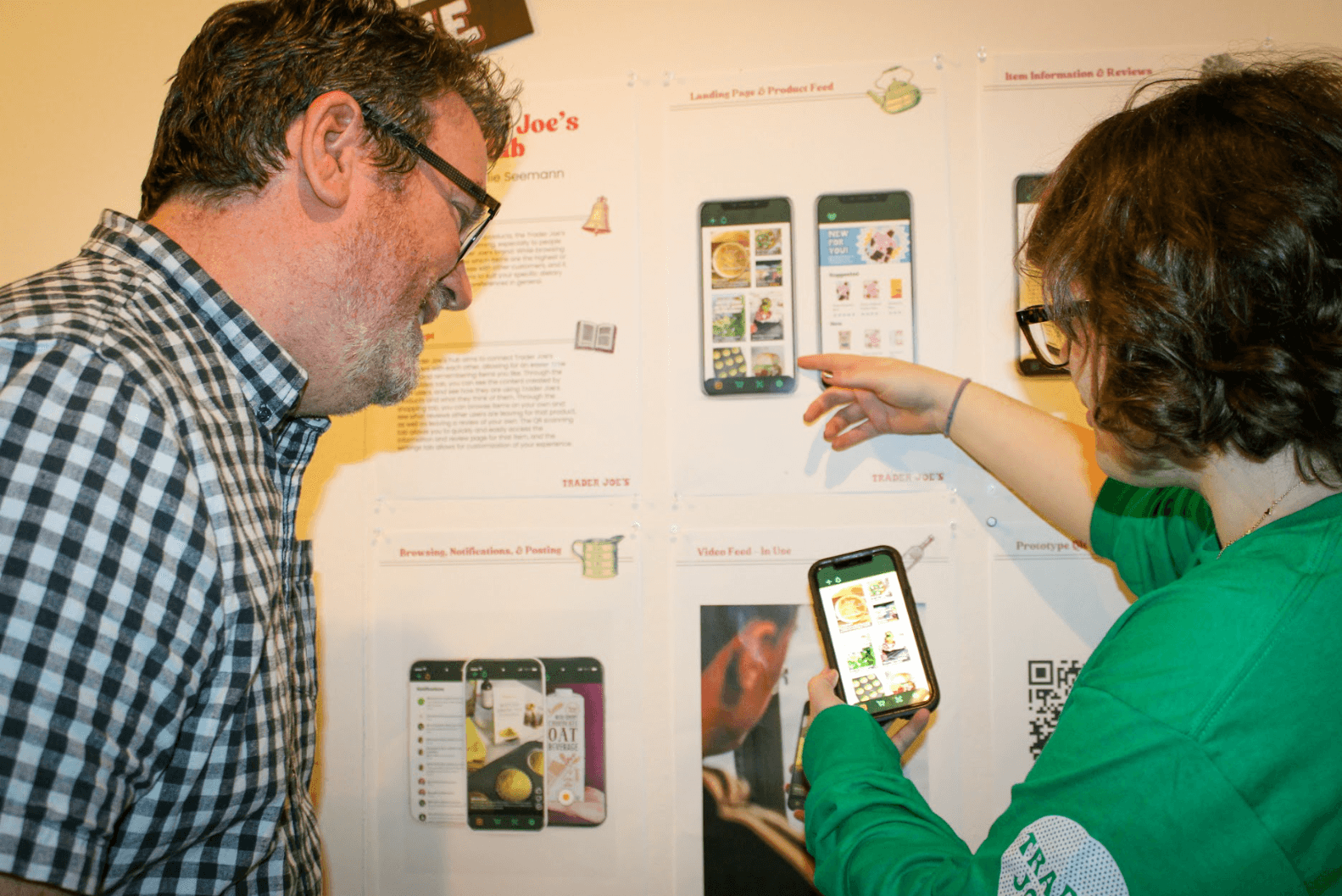
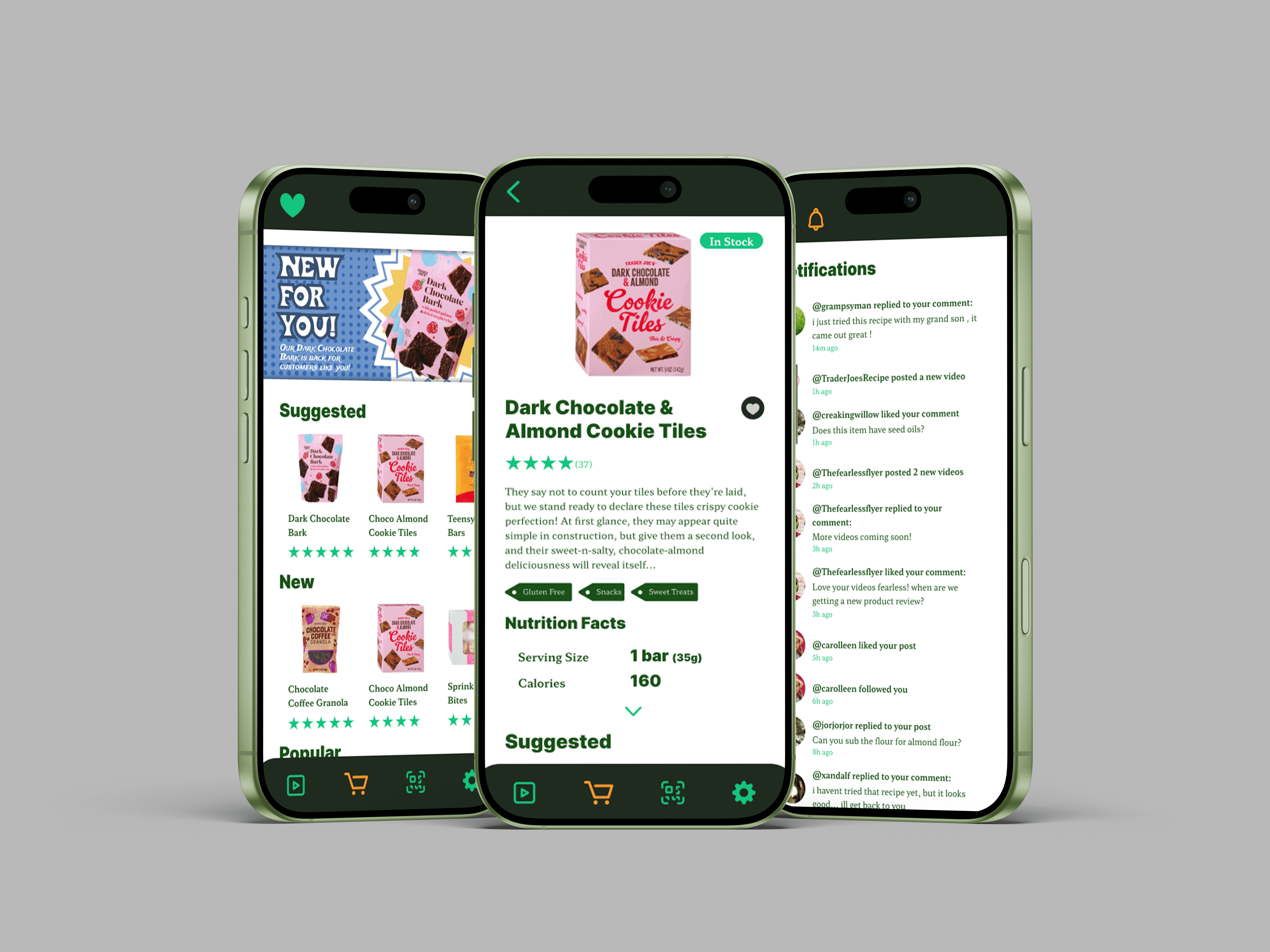
In a collaborative exhibit between Loyola University of New Orleans and Trader Joe's, the Trader Joe's Hub was designed as a tool to help users discover products and make easier purchase decisions. From this app they are also able to interact with other users with similar interests and strengthen brand perception.
Problem Statement
Although the Trader Joe's has a very loyal clientele, many regular shoppers have issues with the frequency at which store stock is swapped out. When entering the store, many people become overwhelmed by its haphazard organization, disappointed by items that they wanted being missing, and distracted by unfamiliar product displays. This results in the buyer getting less than they intended, leaving the customer with a confused impression and the store with less revenue.
Opportunity
A social app which centralizes important information about store stock gives users a way to prep before a trip to their local Trader Joe's, giving them a more cohesive shopping experience and encouraging customers to buy more items by equipping them with more product knowledge. The social aspect also helps to increase brand attachment and community, increasing the loyalty of the already dedicated customer base.
Design System
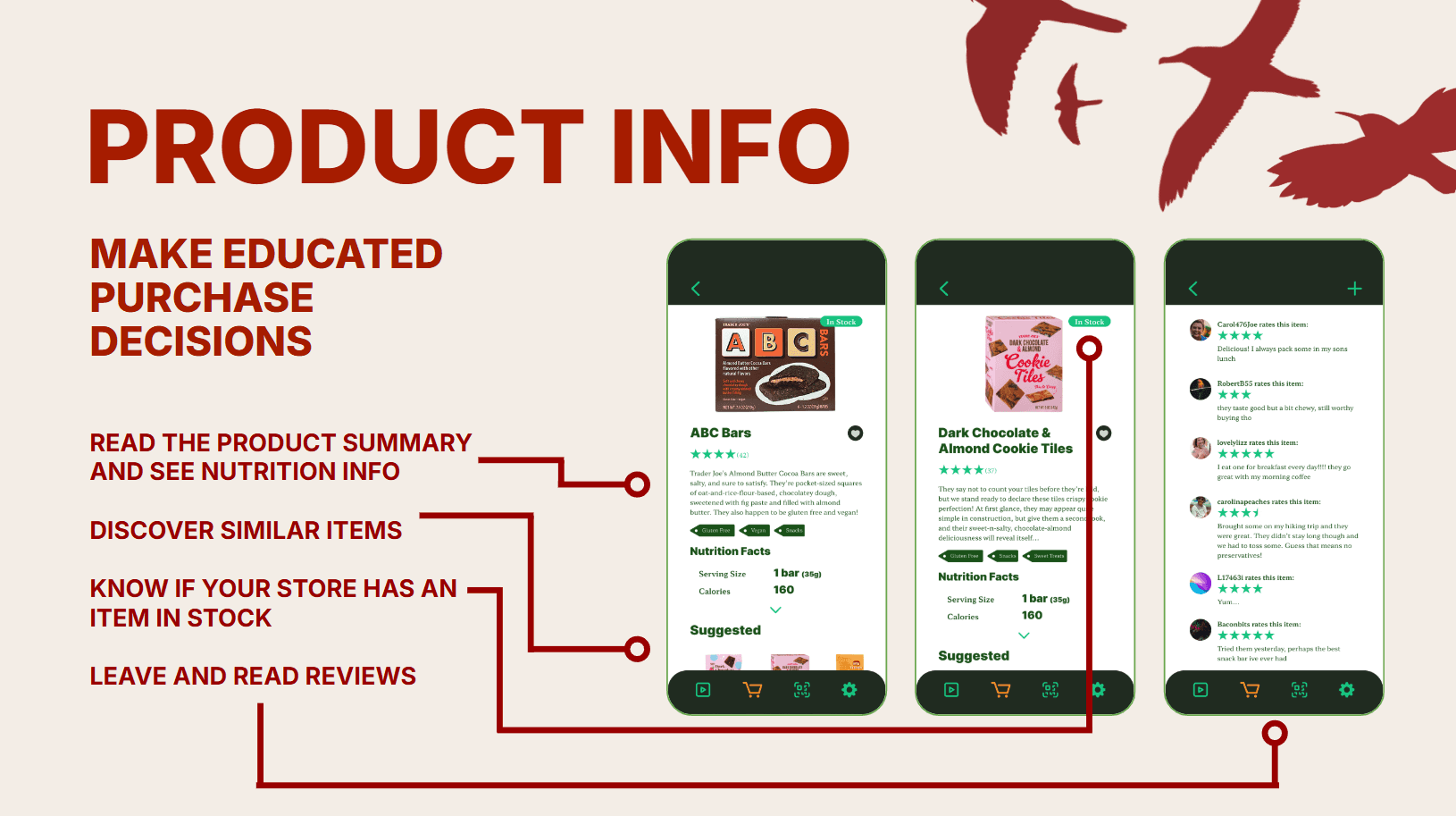
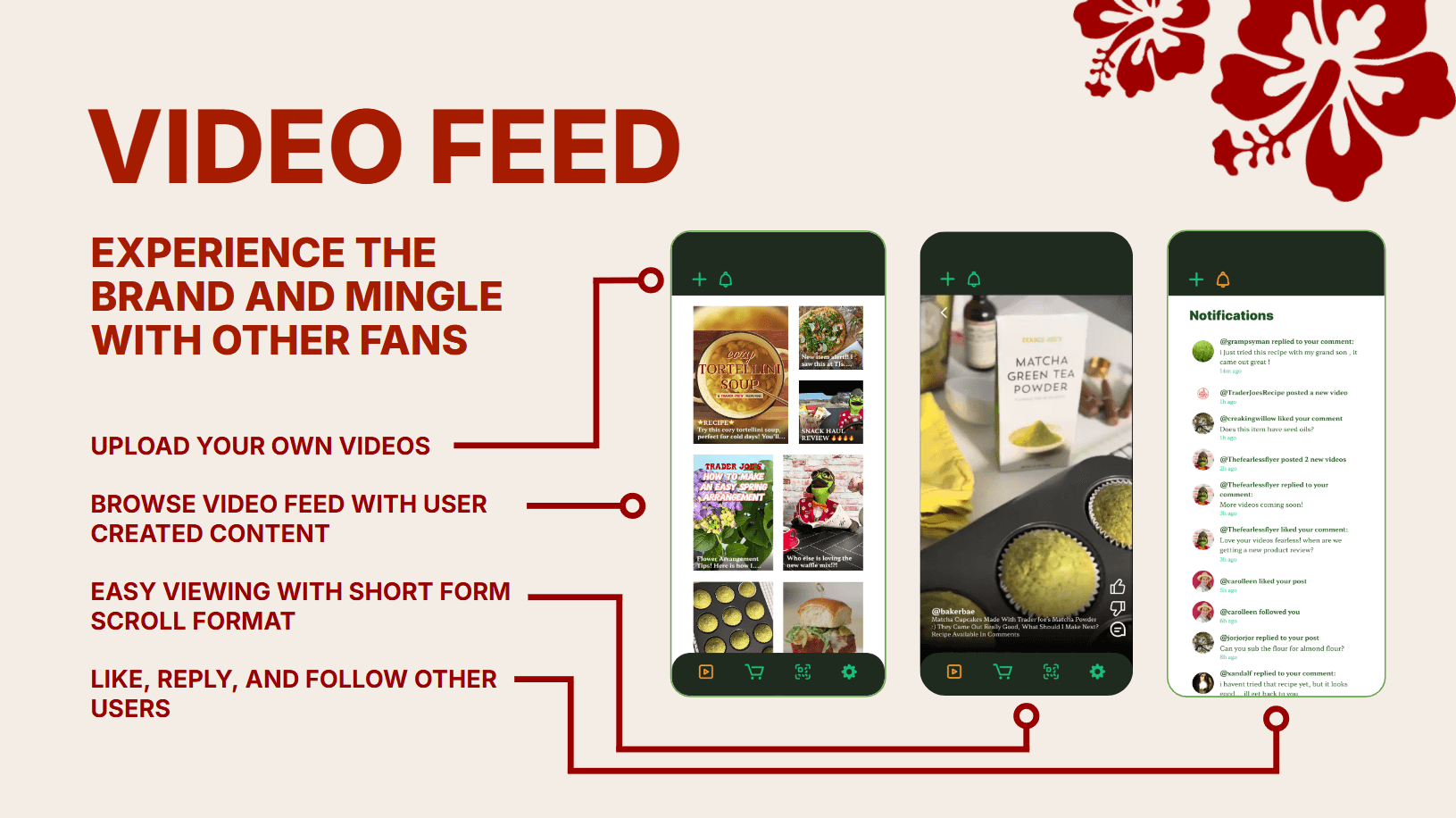
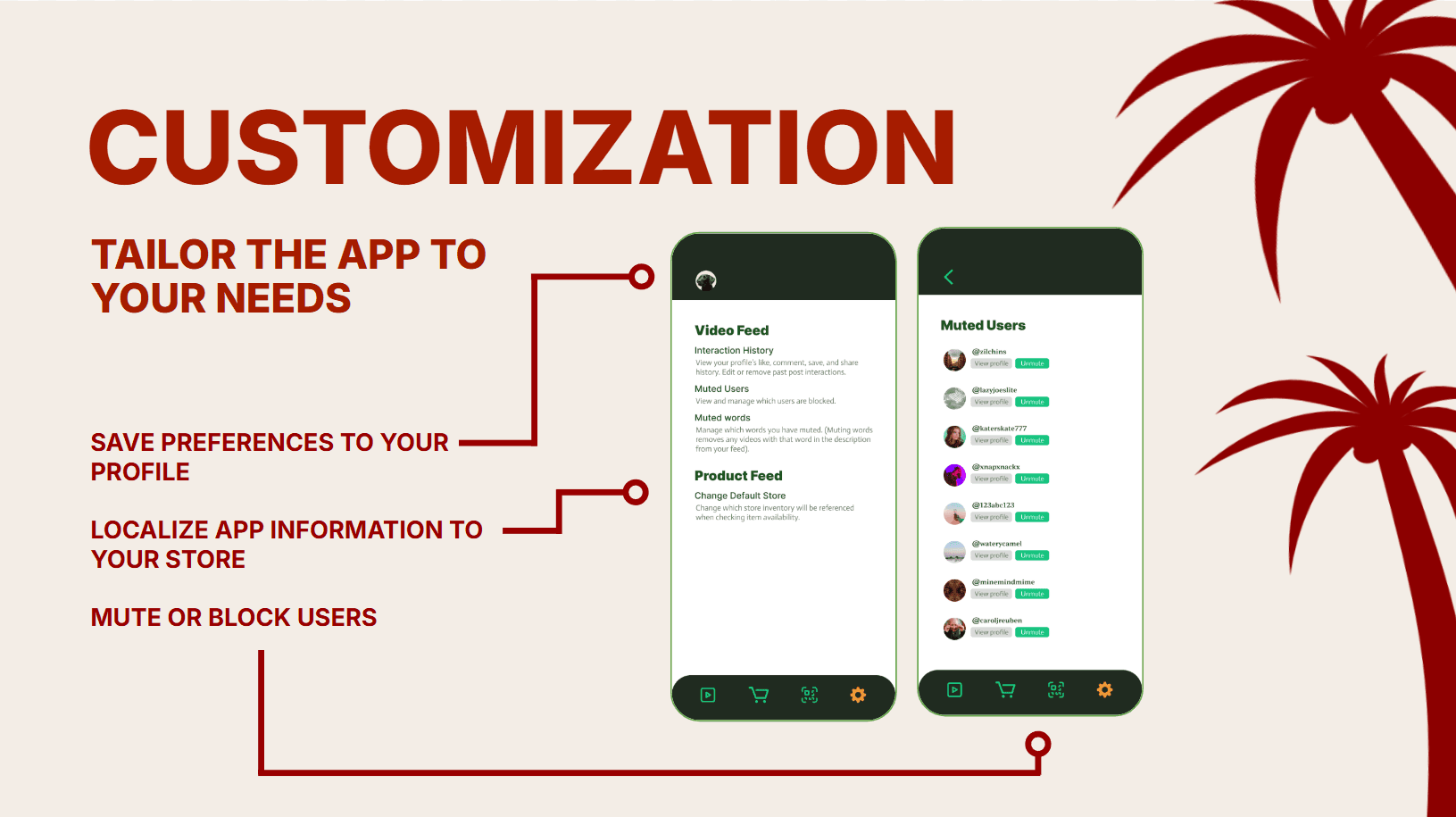
This app borrows elements from both social media and shopping apps. The templated product pages, categorized browsing section, folding menus, QR scan, and review system are made to facilitate a user's shopping process. The scrolling video feed, comments and interpersonal interactions, and favorite system are intended to increase users' time spent engaging with the brand on the app and heighten brand perception.
Design Structure & User Flow
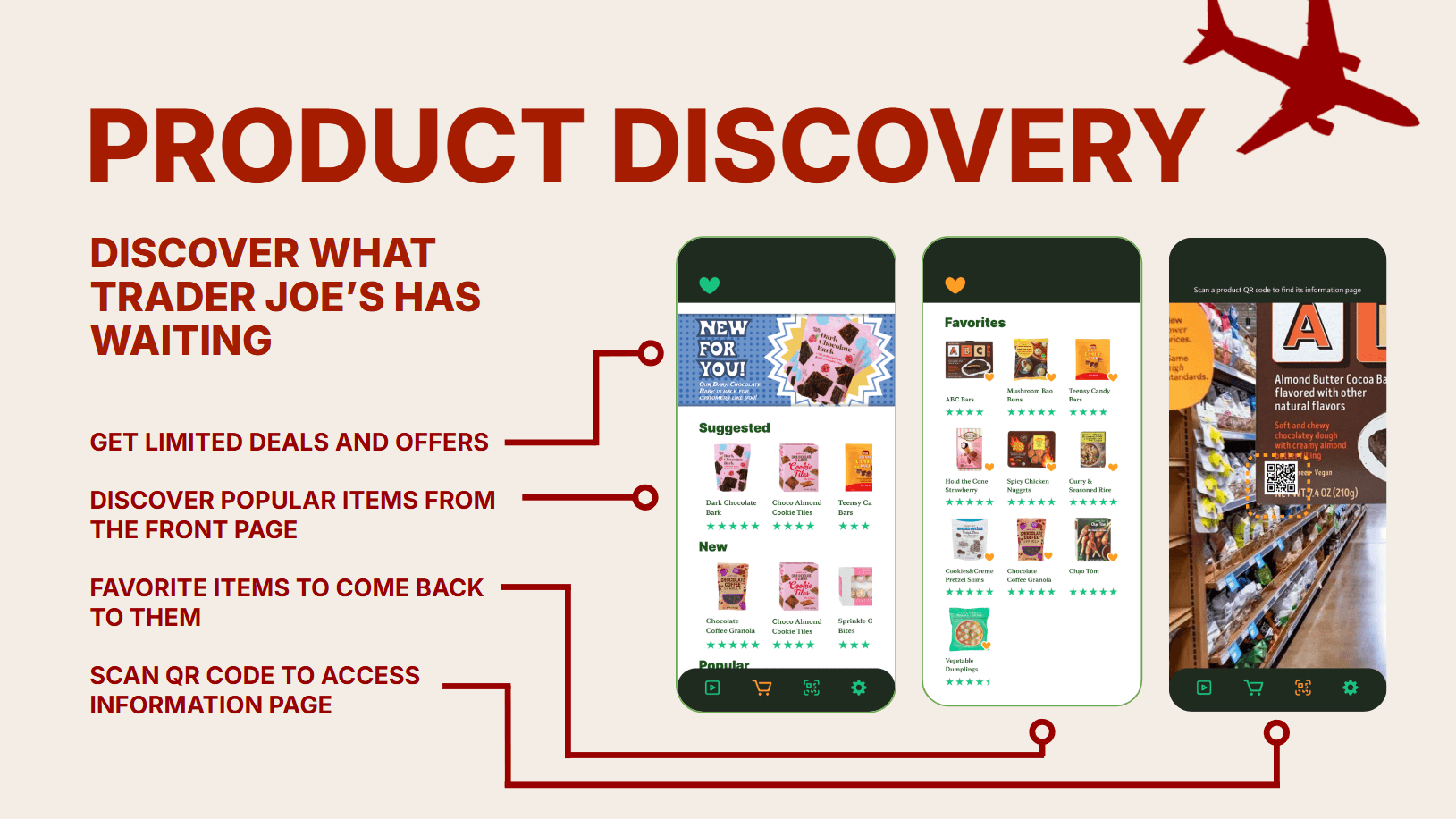
Since the primary goal of the app is to inform about Trader Joe's products, the landing page immediately encourages users to explore their inventory through popular categories and tailored recomendations. By tapping on product thumbnails, users will be taken to a product page which includes a detailed overview of the product as well as customer reviews and further item reocmmendations. This way, users of the app can preload knowledge about Trader Joe's inventory to avoid being overwhelmed at the store and shop with purpose.
The social functions of the app bring users closer to the brand and help to develop a stronger community around Trader Joe's. By accessing the video feed, users can browse user-created content and interact with other users to have discussions about their favorite items, limited or seasonal products, and any other topic related to Trader Joe's. By giving the community a dedicated space, it can also develop its own culture which can serve as its own allure for those interested in Trader Joe's.